Posts tonen met het label anti-semitisme. Alle posts tonen

5.06.2020

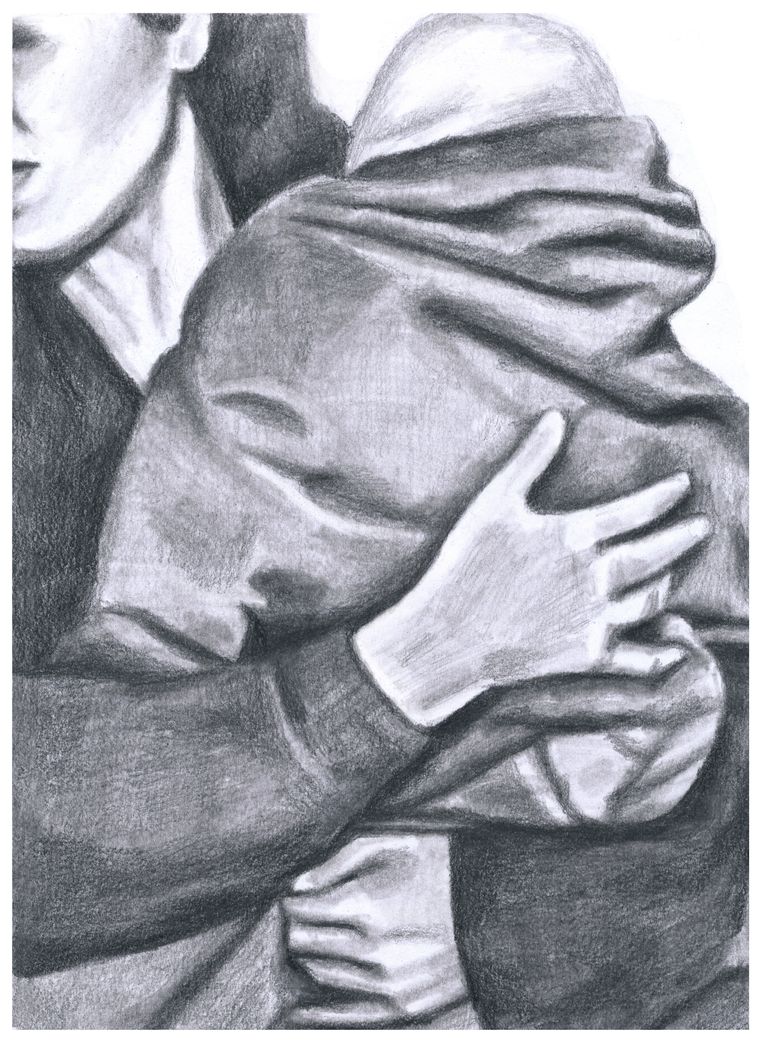
Charlotte Salomon in close-up

Vandaag gaan we naar een museum. In het Joods Historisch Museum in Amsterdam loopt momenteel een tentoonstelling met werk van Charlotte Salomon. Een bijzonder getalenteerde vrouw, vermoord door de nazi's. 


Speciaal voor deze coronatijden krijgen we een uitgebreide virtuele rondleiding.

In 1947 wordt in het Zuid-Franse kustplaatsje Villefranche-sur-Mer een uniek kunstwerk aangetroffen. Het is een geweldig dik pak met meer dan 1.100 tekeningen en geschriften van Charlotte Salomon, een Joodse kunstenares met een ontzettend veelbewogen leven. De tentoonstelling 'De invloed van cinema op Leven? of Theater?' laat haar aangrijpende levensverhaal zien (en aangrijpend dat is het), maar het werpt vooral ook een totaal nieuwe blik op haar werk. De tentoonstelling was slechts een half uur open, toen tijdens de opening de maatregelen werden afgekondigd en het museum moest sluiten.


Meer:
bij Thuismuseum
op de site van Joods Historisch Museum

5.05.2020

Herdenken gaat uit van de vaststelling dat het verleden niet voltooid is

Op 8 mei herdenken we het einde van de Tweede Wereldoorlog.

In België is die herdenking samengevoegd bij 11 november. Enkele lokale initiatieven en herdenkingen houden de herinnering levendig, maar in Nederland is de herdenking een groots gebeuren. Op 4 en 5 mei houden zij Dodenherdenking.


In het kader van dit gebeuren gaf Arnon Grunberg een lezing in de Amsterdams Nieuwe Kerk. En ik moet zeggen, impressionant.

Ik neem hem hier integraal over:

Herdenken gaat uit van de vaststelling dat het verleden niet voltooid is


Vaak heb ik me afgevraagd wat het nut is van herdenken, van bijeenkomsten als deze. Herdenken wij omdat de traditie ons dat voorschrijft, of staat er meer op het spel?

Verleden voorjaar tijdens een lezing over het werk van Marga Minco en de oorlog – ik weet niet of de oorlog míj achtervolgt of dat ík het ben die de oorlog achtervolgt – merkte ik op dat herdenken meer zou moeten zijn dan een ritueel, dat het een verlangen naar kennis in zich zou moeten dragen, en dat gemeenplaatsen daarom de vijand zijn van betekenisvolle herdenkingsrituelen. Ik besefte ook dat die andere gemeenplaats, dat we het verhaal over de oorlog en de Joden nu wel kennen, steeds luider is gaan klinken; een hoogmoedige gemeenplaats, die uitgaat van de gedachte dat onze kennis volmaakt is, dat we kunnen scheiden van het betrekkelijk recente verleden.

Zeggen het verleden nu wel te kennen is veelal een weigering om er kennis van te nemen. En wie zijn verleden niet kent, is niet zozeer gedoemd het te herhalen, als wel is hij gedoemd niet te weten wie hij is. Niets doet mensen zozeer naar een onwrikbare identiteit verlangen als het knagende vermoeden dat ze geen idee hebben wie ze zijn. En het is vaak de onwrikbare eigen identiteit, de weigering er speels mee om te gaan die ertoe leidt dat de ander als een volstrekte vreemde en een absolute vijand wordt gezien.

Na afloop van die lezing over Minco kwam een psychotherapeut naar me toe, die zei dat we rituelen en gemeenplaatsen nodig hebben om niet ziek te worden van het herdenken, dat we het verleden op afstand moeten houden om er niet aan onder­door te gaan. Zeker, maar als we helemaal niet ziek worden van die 20ste eeuw, vrees ik dat er niets herdacht is en al helemaal niets begrepen.
Niet ziek worden zou weleens een symptoom kunnen zijn van wegkijken, van ontkenning. Als we ontkennen dat de ziekten van de vorige eeuw – die van het geïndustrialiseerde totalitarisme, van het tot genocide verworden antisemitisme, van het biologisch racisme – diep in onze cultuur zitten, dan weten we niet wie we zijn. En juist dan zijn wij vatbaar voor verleiders die ons komen vertellen wie wij zijn en wie wij moeten vrezen. Herdenken is altijd ook een manier om aan te geven wie je níét wenst te zijn, maar wie je toch meent te kunnen worden. Geen herdenken zonder dit angstige vermoeden, geen betekenisvol herdenken zonder gegronde vrees dat wij de toekomstige daders en hun helpers zijn.

Herdenken gaat uit van de vaststelling dat het verleden niet voltooid is, van het besef dat de buik die het Derde Rijk baarde nog vruchtbaar is.

Censuur en uitstoting zijn geen antwoord op die vruchtbaarheid, het is een verworvenheid dat wij in een land leven waar de overheid ons niet vertelt wat zedelijk en onzedelijk denken is. Maar dat betekent niet dat elke grens overschreden moet kunnen worden. Bepaalde taboes hebben zich geleidelijk aan na 1945 met goede redenen in onze cultuur genesteld; de taboebreuk is niet altijd een bevrijding, soms is die taboebreuk slechts een terugval.

Deze herdenking is altijd ook een waarschuwing.

Het verhaal van de overlevenden, van degenen die uit de concentratiekampen terugkeerden, Joden, Roma en Sinti, politieke tegenstanders, onder wie veel communisten en sociaal-democraten, is een verhaal van uitzonderingen. De meeste slachtoffers hebben het kamp door de schoorsteen verlaten. Mijn moeder was een uitzondering; haar ouders, mijn grootouders, niet.

Herdenken is tevens namens de doden spreken, en namens de doden spreken kan alleen door de ooggetuigen aan het woord te laten. Ik wil een ooggetuige aan het woord laten die zeer dicht bij de doden is geweest, Filip Müller, een Slowaakse Jood, lid van het Sonderkommando van Auschwitz-Birkenau.

Het Sonderkommando bestond voornamelijk uit Joden en was belast met het uit de gaskamers halen van de lijken, het knippen van de haren van de lijken, het trekken van gouden tanden uit de lijken, het verbranden van de lijken. De meeste leden van het Sonderkommando werden na enkele maanden vermoord. Het laatste Sonderkommando in Auschwitz kwam in de herfst van 1944 in opstand, waarbij vrijwel alle leden van dat Kommando werden vermoord.

Müller schrijft in zijn memoires over enkele Joodse gezinnen die onder erbarmelijke omstandigheden ondergedoken hebben gezeten in bunkers nabij het Poolse plaatsje Sosnowiec. Door het huilen van de kinderen is de SS hen op het spoor gekomen.
Ze zijn naar Auschwitz gebracht. De vrouwen en kinderen wordt gevraagd zich uit te kleden, de normale procedure. Ze worden echter niet vergast maar doodgeschoten, wat uitzonderlijk is. Müller verklaart niet waarom. Misschien waren er even niet genoeg mensen om de gaskamers mee te vullen, het zyklon B mocht niet worden verspild.

De moordmachine van de nazi’s was naast al het andere ook een economische aangelegenheid, een gigantische roofpartij waarbij het doden en wegwerken van de lijken zo efficiënt mogelijk moest gebeuren.

De naakte vrouwen staan met hun kinderen voor de executiemuur. Dan schrijft Müller over een vrouw met haar kind in haar armen: ‘Ondertussen liep Voss, de beul, met zijn klein kaliber geweer nerveus om hen heen, om bij het kind een geschikte plaats te vinden waarop hij het wapen kon richten. Toen de wanhopige moeder dat merkte wrong ze zich in alle bochten om haar kind uit het schootsveld van het dodelijke wapen te houden. Wanhopig probeerde ze elke plek op het lichaam van haar kind met haar armen en handen te bedekken.
Toen knalden er opeens een paar schoten door de stilte. Het kind was van opzij in de borst getroffen. De moeder, die voelde dat het bloed van haar kind langs haar lichaam liep, verloor haar zelfbeheersing en smeet de moordenaar het kind in het gezicht, toen die de loop van zijn wapen al op haar had gericht. Oberscharführer Voss was van zijn stuk gebracht en stond daar als versteend. Toen hij het nog warme bloed in zijn gezicht voelde, liet hij zijn geweer vallen en wreef met zijn hand over zijn gezicht.’
Veelzeggend dat we de naam van de Oberscharführer nu kennen, maar de naam van die vrouw en dat kind niet weten en vermoedelijk nooit te weten zullen komen.
Als herdenken ook verlangen naar kennis is, dan zijn details belangrijk, kennis bestaat uit details, dan kunnen we het ons niet permitteren te zeggen dat wij bepaalde details niet wensen te horen omdat ze onze nachtrust verstoren.

Aan deze vrouw die haar halfdode kind in het gezicht van Oberscharführer Voss gooide, gingen verkiezingen vooraf, ambtelijke orders, gewillige en minder gewillige helpers, van wie de meesten nooit in een concentratiekamp waren, nooit iemand gedood hebben. Waarbij het goed is te beseffen dat het niet alleen de Duitsers waren die, toen de oorlog voorbij was, zeiden dat ze het niet hadden geweten, dat ze slechts orders hadden opgevolgd.

Literatuurwetenschapper S. Dresden schrijft in zijn studie Vervolging, vernietiging, literatuur over een voorval waarover de schrijver K. Tzetnik, pseudoniem van Yehiel De-Nur, bericht. Een groep levende zigeunervrouwen en ­kinderen wordt in een kuil gegooid in Auschwitz, omdat de crematoria overbelast zijn. Een Nederlandse gevangene krijgt het bevel kerosine over de mensen in de kuil te storten. Hij weigert en wordt daarop zelf levend in de vlammen getrapt. ‘Het Nederlandse ‘Nee! Nee!’ klinkt de schrijver nog steeds in de oren’, noteert Dresden.

Mijn moeder arriveerde in de herfst van 1944 in Auschwitz, kort na de opstand van het Sonderkommando, waarvan ze niets heeft meegekregen. Zelf zei ze dat ze gelukkig was in Auschwitz, omdat ze daar hoop had; hoop verloor ze pas na de bevrijding, toen de omvang van de catastrofe tot haar doordrong.

Ze is geboren in 1927 in Berlijn, in 1939 reisde ze op het beroemd geworden schip St. Louis met haar ouders vanuit Hamburg naar Cuba, maar Cuba sloot de grenzen, Amerika sloot de grenzen, Canada sloot de grenzen, zo spoelde ze met haar ouders aan in Nederland.

Mijn vader, eveneens geboren in Berlijn, in 1912, overleefde de oorlog op diverse onderduikadressen. Vaak moest hij zich voordoen als gedeserteerde Wehrmachtsoldaat om een onderduikadres te krijgen. Hij vertelde weinig, en als hij dit al deed eigenlijk per ongeluk, terloops, maar een van de mensen die hem lieten onderduiken, schijnt na de oorlog tegen hem te hebben gezegd: ‘Als we hadden geweten dat je een Jood was, was je er niet in gekomen.’

Met een familie bij wie hij in Rotterdam ondergedoken had gezeten, hield hij contact. Een keer per jaar ging hij daar met mij heen. Ze hadden witte muizen in een kooitje.
Dan was er nog een haringman die bij de beurs stond op het Rokin in Amsterdam. Hoewel wij in de Rivierenbuurt woonden, ging mijn vader met lijn 25 naar die haringman, omdat hij hem nog uit de oorlog kende, de haringman had in het verzet gezeten. Ik ging weleens mee en hoewel ze elkaar goed moeten hebben gekend uit de oorlog, zeiden ze nooit echt iets tegen elkaar, ze praatten slechts over haring.

Dat was de oorlog voor mij als kind: witte muizen in een kooitje, een haringman bij de beurs, het geluk in Auschwitz. Ik had toen niet gedacht dat ik een paar decennia later als columnist voor een Nederlandse krant een reeks onbeschaamd antisemitische e-mails zou ontvangen. Ik dacht toen dat het taboe te groot was. Dat was naïef.

En het is ook logisch dat als er gesproken wordt over bepaalde bevolkingsgroepen op een manier die doet denken aan de meest duistere tijd uit de twintigste eeuw, als dat gewoon is geworden, er vroeg of laat op die manier ook weer over Joden gesproken kan worden.

Voor mij was het van begin af aan duidelijk: als ze het over Marokkanen hebben, dan hebben ze het over mij.

‘Ik kan niet begrijpen, niet verdragen dat men een mens beoordeelt niet naar wat hij is, maar naar de groep waar hij toevallig toe behoort’, schreef Primo Levi in de jaren zestig aan zijn Duitse vertaler.
Woorden die wij wekelijks, misschien wel dagelijks zouden moeten herhalen, al was het maar om ons eraan te herinneren hoe giftig woorden kunnen zijn.
Dat een Nederlander in Auschwitz kerosine over levende vrouwen en kinderen moest uitgieten begon met woorden, met toespraken van politici.
Juist in deze geseculariseerde tijden rust, meen ik, een speciale verantwoordelijkheid op Kamerleden, op ministers om het goede voorbeeld te geven, om het woord géén gif te laten zijn, om altijd voor ogen te houden dat de staat noodzakelijk is maar tevens een potentieel kwaad dat met achteloze vanzelfsprekendheid mensen, bevolkingsgroepen kan vermorzelen.
De vrouw die haar halfdode kind in het gezicht van Oberscharführer Voss gooide, zij waarschuwt ons.
De Nederlander die ‘Nee! Nee!’ riep, die weigerde kerosine over levende vrouwen en kinderen uit te gieten en toen zelf het vuur in werd getrapt, hij waarschuwt ons.

Overgenomen uit de Volkskrant.

11.23.2019

Sasha Baron Cohen over haat en sociale media

Kameraden en vrienden, met stip dé meest bekijkenswaardige speech van het jaar. Sasha Baron Cohen over haat en over de rol van de sociale mediabedrijven in de verspreiding ervan.


Today around the world, demagogues appeal to our worst instincts.  Conspiracy theories once confined to the fringe are going mainstream.  It’s as if the Age of Reason—the era of evidential argument—is ending, and now knowledge is delegitimized and scientific consensus is dismissed.  Democracy, which depends on shared truths, is in retreat, and autocracy, which depends on shared lies, is on the march.  Hate crimes are surging, as are murderous attacks on religious and ethnic minorities. 

What do all these dangerous trends have in common?  I’m just a comedian and an actor, not a scholar.  But one thing is pretty clear to me.  All this hate and violence is being facilitated by a handful of internet companies that amount to the greatest propaganda machine in history.


Think about it.  Facebook, YouTube and Google, Twitter and others—they reach billions of people.  The algorithms these platforms depend on deliberately amplify the type of content that keeps users engaged—stories that appeal to our baser instincts and that trigger outrage and fear.  It’s why YouTube recommended videos by the conspiracist Alex Jones billions of times.  It’s why fake news outperforms real news, because studies show that lies spread faster than truth.  And it’s no surprise that the greatest propaganda machine in history has spread the oldest conspiracy theory in history—the lie that Jews are somehow dangerous.  As one headline put it, “Just Think What Goebbels Could Have Done with Facebook.”

On the internet, everything can appear equally legitimate.  Breitbart resembles the BBC.  The fictitious Protocols of the Elders of Zion look as valid as an ADL report.  And the rantings of a lunatic seem as credible as the findings of a Nobel Prize winner.  We have lost, it seems, a shared sense of the basic facts upon which democracy depends.
When I, as the wanna-be-gansta Ali G, asked the astronaut Buzz Aldrin “what woz it like to walk on de sun?” the joke worked, because we, the audience, shared the same facts.  If you believe the moon landing was a hoax, the joke was not funny.
When Borat got that bar in Arizona to agree that “Jews control everybody’s money and never give it back,” the joke worked because the audience shared the fact that the depiction of Jews as miserly is a conspiracy theory originating in the Middle Ages.
But when, thanks to social media, conspiracies take hold, it’s easier for hate groups to recruit, easier for foreign intelligence agencies to interfere in our elections, and easier for a country like Myanmar to commit genocide against the Rohingya.

It’s actually quite shocking how easy it is to turn conspiracy thinking into violence.  In my last show Who is America?, I found an educated, normal guy who had held down a good job, but who, on social media, repeated many of the conspiracy theories that President Trump, using Twitter, has spread more than 1,700 times to his 67 million followers.  The President even tweeted that he was considering designating Antifa—anti-fascists who march against the far right—as a terror organization.  

So, disguised as an Israel anti-terrorism expert, Colonel Erran Morad, I told my interviewee that, at the Women’s March in San Francisco, Antifa were plotting to put hormones into babies’ diapers in order to “make them transgender.”  And he believed it.
I instructed him to plant small devices on three innocent people at the march and explained that when he pushed a button, he’d trigger an explosion that would kill them all.  They weren’t real explosives, of course, but he thought they were.  I wanted to see—would he actually do it?
The answer was yes.  He pushed the button and thought he had actually killed three human beings.  Voltaire was right, “those who can make you believe absurdities, can make you commit atrocities.”  And social media lets authoritarians push absurdities to billions of people.
In their defense, these social media companies have taken some steps to reduce hate and conspiracies on their platforms, but these steps have been mostly superficial.

I’m speaking up today because I believe that our pluralistic democracies are on a precipice and that the next twelve months, and the role of social media, could be determinant.  British voters will go to the polls while online conspiracists promote the despicable theory of “great replacement” that white Christians are being deliberately replaced by Muslim immigrants.  Americans will vote for president while trolls and bots perpetuate the disgusting lie of a “Hispanic invasion.”  And after years of YouTube videos calling climate change a “hoax,” the United States is on track, a year from now, to formally withdraw from the Paris Accords.  A sewer of bigotry and vile conspiracy theories that threatens democracy and our planet—this cannot possibly be what the creators of the internet had in mind.

I believe it’s time for a fundamental rethink of social media and how it spreads hate, conspiracies and lies.  Last month, however, Mark Zuckerberg of Facebook delivered a major speech that, not surprisingly, warned against new laws and regulations on companies like his.  Well, some of these arguments are simply absurd.  Let’s count the ways.
First, Zuckerberg tried to portray this whole issue as “choices…around free expression.”  That is ludicrous.  This is not about limiting anyone’s free speech.  This is about giving people, including some of the most reprehensible people on earth, the biggest platform in history to reach a third of the planet.  Freedom of speech is not freedom of reach.  Sadly, there will always be racists, misogynists, anti-Semites and child abusers.  But I think we could all agree that we should not be giving bigots and pedophiles a free platform to amplify their views and target their victims.
Second, Zuckerberg claimed that new limits on what’s posted on social media would be to “pull back on free expression.”  This is utter nonsense.  The First Amendment says that “Congress shall make no law” abridging freedom of speech, however, this does not apply to private businesses like Facebook.  We’re not asking these companies to determine the boundaries of free speech across society.  We just want them to be responsible on their platforms.
If a neo-Nazi comes goose-stepping into a restaurant and starts threatening other customers and saying he wants kill Jews, would the owner of the restaurant be required to serve him an elegant eight-course meal?  Of course not!  The restaurant owner has every legal right and a moral obligation to kick the Nazi out, and so do these internet companies.
Third, Zuckerberg seemed to equate regulation of companies like his to the actions of “the most repressive societies.”  Incredible.  This, from one of the six people who decide what information so much of the world sees.  Zuckerberg at Facebook, Sundar Pichai at Google, at its parent company Alphabet, Larry Page and Sergey Brin, Brin’s ex-sister-in-law, Susan Wojcicki at YouTube and Jack Dorsey at Twitter. 
 The Silicon Six—all billionaires, all Americans—who care more about boosting their share price than about protecting democracy.  This is ideological imperialism—six unelected individuals in Silicon Valley imposing their vision on the rest of the world, unaccountable to any government and acting like they’re above the reach of law.  It’s like we’re living in the Roman Empire, and Mark Zuckerberg is Caesar.  At least that would explain his haircut.
 Here’s an idea.  Instead of letting the Silicon Six decide the fate of the world, let our elected representatives, voted for by the people, of every democracy in the world, have at least some say.
Fourth, Zuckerberg speaks of welcoming a “diversity of ideas,” and last year he gave us an example.  He said that he found posts denying the Holocaust “deeply offensive,” but he didn’t think Facebook should take them down “because I think there are things that different people get wrong.”  At this very moment, there are still Holocaust deniers on Facebook, and Google still takes you to the most repulsive Holocaust denial sites with a simple click.  One of the heads of Google once told me, incredibly, that these sites just show “both sides” of the issue.  This is madness.
To quote Edward R. Murrow, one “cannot accept that there are, on every story, two equal and logical sides to an argument.”  We have millions of pieces of evidence for the Holocaust—it is an historical fact.  And denying it is not some random opinion.  Those who deny the Holocaust aim to encourage another one.
Still, Zuckerberg says that “people should decide what is credible, not tech companies.”  But at a time when two-thirds of millennials say they haven’t even heard of Auschwitz, how are they supposed to know what’s “credible?”  How are they supposed to know that the lie is a lie?
There is such a thing as objective truth.  Facts do exist.  And if these internet companies really want to make a difference, they should hire enough monitors to actually monitor, work closely with groups like the ADL, insist on facts and purge these lies and conspiracies from their platforms.
Fifth, when discussing the difficulty of removing content, Zuckerberg asked “where do you draw the line?”  Yes, drawing the line can be difficult.  But here’s what he’s really saying: removing more of these lies and conspiracies is just too expensive.

These are the richest companies in the world, and they have the best engineers in the world.  They could fix these problems if they wanted to.  Twitter could deploy an algorithm to remove more white supremacist hate speech, but they reportedly haven’t because it would eject some very prominent politicians from their platform.  Maybe that’s not a bad thing!  The truth is, these companies won’t fundamentally change because their entire business model relies on generating more engagement, and nothing generates more engagement than lies, fear and outrage.   

It’s time to finally call these companies what they really are—the largest publishers in history.  And here’s an idea for them: abide by basic standards and practices just like newspapers, magazines and TV news do every day.  We have standards and practices in television and the movies; there are certain things we cannot say or do.  In England, I was told that Ali G could not curse when he appeared before 9pm.  Here in the U.S., the Motion Picture Association of America regulates and rates what we see.  I’ve had scenes in my movies cut or reduced to abide by those standards.  If there are standards and practices for what cinemas and television channels can show, then surely companies that publish material to billions of people should have to abide by basic standards and practices too.

Take the issue of political ads.  Fortunately, Twitter finally banned them, and Google is making changes, too.  But if you pay them, Facebook will run any “political” ad you want, even if it’s a lie.  And they’ll even help you micro-target those lies to their users for maximum effect.  Under this twisted logic, if Facebook were around in the 1930s, it would have allowed Hitler to post 30-second ads on his “solution” to the “Jewish problem.”  So here’s a good standard and practice: Facebook, start fact-checking political ads before you run them, stop micro-targeted lies immediately, and when the ads are false, give back the money and don’t publish them.

Here’s another good practice: slow down.  Every single post doesn’t need to be published immediately.  Oscar Wilde once said that “we live in an age when unnecessary things are our only necessities.”  But is having every thought or video posted instantly online, even if it is racist or criminal or murderous, really a necessity?  Of course not!

The shooter who massacred Muslims in New Zealand live streamed his atrocity on Facebook where it then spread across the internet and was viewed likely millions of times.  It was a snuff film, brought to you by social media.  Why can’t we have more of a delay so this trauma-inducing filth can be caught and stopped before it’s posted in the first place?

Finally, Zuckerberg said that social media companies should “live up to their responsibilities,” but he’s totally silent about what should happen when they don’t.  By now it’s pretty clear, they cannot be trusted to regulate themselves.  As with the Industrial Revolution, it’s time for regulation and legislation to curb the greed of these high-tech robber barons. 

In every other industry, a company can be held liable when their product is defective.  When engines explode or seatbelts malfunction, car companies recall tens of thousands of vehicles, at a cost of billions of dollars.  It only seems fair to say to Facebook, YouTube and Twitter: your product is defective, you are obliged to fix it, no matter how much it costs and no matter how many moderators you need to employ.

In every other industry, you can be sued for the harm you cause.  Publishers can be sued for libel, people can be sued for defamation.  I’ve been sued many times!  I’m being sued right now by someone whose name I won’t mention because he might sue me again!  But social media companies are largely protected from liability for the content their users post—no matter how indecent it is—by Section 230 of, get ready for it, the Communications Decency Act.  Absurd!

Fortunately, Internet companies can now be held responsible for pedophiles who use their sites to target children.  I say, let’s also hold these companies responsible for those who use their sites to advocate for the mass murder of children because of their race or religion.  And maybe fines are not enough.  Maybe it’s time to tell Mark Zuckerberg and the CEOs of these companies: you already allowed one foreign power to interfere in our elections, you already facilitated one genocide in Myanmar, do it again and you go to jail.

In the end, it all comes down to what kind of world we want.  In his speech, Zuckerberg said that one of his main goals is to “uphold as wide a definition of freedom of expression as possible.”  Yet our freedoms are not only an end in themselves, they’re also the means to another end—as you say here in the U.S., the right to life, liberty and the pursuit of happiness.  But today these rights are threatened by hate, conspiracies and lies.

Allow me to leave you with a suggestion for a different aim for society.  The ultimate aim of society should be to make sure that people are not targeted, not harassed and not murdered because of who they are, where they come from, who they love or how they pray.

If we make that our aim—if we prioritize truth over lies, tolerance over prejudice, empathy over indifference and experts over ignoramuses—then maybe, just maybe, we can stop the greatest propaganda machine in history, we can save democracy, we can still have a place for free speech and free expression, and, most importantly, my jokes will still work.

bron: ADL.org

11.10.2011

Kristallnacht

Op de nacht van 9 op 10 november 1938 werd Duitsland geconfronteerd met een grootschalige pogrom tegen een reeds lang beschimpte en uitgescholden godsdienstige minderheid.

Tijdens de Kristallnacht werden 92 mensen vermoord, 267 synagogen in brand gestoken, meer dan 7000 winkels en bedrijven werden vernield, een aantal mensen werd mishandeld en zagen hun huizen vernield, ook ziekenhuizen en kerkhoven moesten het ontgelden.

De zogenaamde aanleiding voor deze gruwel was een aanslag op een Duitse diplomaat door een 17-jarige jood.


Kameraden en vrienden,


Als er nu nog iemand zou willen beginnen over onze Westerse normen en waarden of over onze zogenaamde joods-christelijke samenleving dan doet die er goed aan te denken aan de gruwel die de afgelopen eeuw gepleegd werd. Dit gruwelijk feit, de gruwelijke massa-deportaties die er aan vooraf gingen en de gruwelijke massamoord die er op volgde toont perfect aan waar zondebok-mechanismen, racisme en haat kunnen toe leiden.

Een bevolkingsgroep, een religieuze minderheid dag in dag uit aanvallen is het begin. De jood was een gevaar, weigerde zich te integreren, als die zich al integreerde dan was dit om als een vermomde wolf lammeren te kunnen vangen, de jood was een op hol geslagen geldwolf, de jood was een gevaarlijke linkse, de jood was een terrorist. Allemaal zaken die we vandaag de dag nog kunnen lezen. Alleen in een andere verpakking.

9.21.2011

Islamofobie, het nieuwe antisemitisme

Kameraden en vrienden,

vandaag aandacht voor de nieuwste publicatie van prof. John Louis Esposito.
Esposito is prof. Internationale Politiek en Islamitische Studies aan de Universiteit van Georgetown, VS en directeur van het Prince Alwaleed Bin Talal Center for Muslim-Christian Understanding (zoals de naam al verraad, een door de Saudi's gesponsord onderzoekscentrum.
'Islamophobia: The Challenge of Pluralism in the 21st Century' is uitgegeven bij Oxford Press.

Voor de liefhebbers, de inhoudsopgave:

Table of Contents
Foreword Ekmeleddin Ihsanoglu, Secretary General of the Organization of
Islamic Conference
Introduction John L. Esposito

THE CONTEXT OF ISLAMOPHOBIA

1. Ibrahim Kalin, “Islamophobia and the Limits of Multiculturalism”
2. Jocelyne Cesari, “Islamophobia” in the West: A Comparison Between
Europe
and America”.

CASE STUDIES

3. Sam Cherribi: Islamophobia in Germany, Austria and Holland
4. Tahir Abbas, “Islamophobia in the UK: Historical and Contemporary
Political and Media Discourses in the Framing of a Twenty-First century
Anti-Muslim Racism
5. Mohamed Nimer, “Breaking the Vicious Cycle of Islamophobia and
Anti-Americanism”
6. Sherman A. Jackson, “Muslims, Islam(s) and Race in America”

MANIFESTATIONS

7. Sunaina Maira, “Islamophobia and the War on Terror: Youth,
Citizenship,
and Dissent”
8. Juan Cole, “Islamophobia and American Foreign Policy”
9. Anas Shaikh Ali, “Islamophobic Discourse Masquerading as Art and
Literature: Combating Myth through Progressive Education”
10. Kate Zebiri, Orientalist Themes in Contemporary British Islamophobia
11. Peter Gottschalk and Gabriel Greenberg, “From Muhammad to Obama:
Caricatures, Cartoons, and Stereotypes of Muslims”


Haroon Siddiqui van TheStar, uit het Canadese Toronto, maakte een lezenswaardige reeks naar aanleiding van dit boek.
Het eerste uit de reeks geven we hier grotendeels weer:

One byproduct of 9/11 has been Islamophobia — fear of Islam and its adherents, Muslims. Rather than recede with time, it has been growing in the United States and Europe, while Canada has not been immune to it.

Hardly a month goes by without some controversy over hijab, niqab, “honour killings,” polygamy, “forced marriages,” “sharia,” prayers in public places, such as at Valley Park Middle School in Toronto, or over how far free speech may be invoked to disproportionately demonize Muslims and Islam without running afoul of Canadian and European anti-hate laws.

Anders Breivik’s murder of 77 people in July to protest what he perceived as the Islamization of Europe was the most extreme example of Islamophobia. But there’s no shortage of incendiary anti-Muslim rhetoric. And there’s also little doubt that anti-Muslim demagoguery has moved from the margins to the mainstream.

Across Europe, far-right parties have made record political gains and are partners in some coalition governments. In the U.S., four Republican presidential candidates are openly on a warpath against Islam and Muslims. Twenty-three states are in various stages of banning sharia, Muslim religious law, as though its imposition was imminent.

It was not supposed to come to this.

In 2001, George W. Bush said that his war was on terrorists, not Muslims or Islam.

But he went on to claim, just as had Osama bin Laden, that his crusade was guided by God. His wars in Afghanistan and Iraq turned into disastrous occupations. Tens of thousands of civilians were killed. There was Guantanamo Bay, Abu Ghraib, torture and indefinite detentions.

Wars, especially long ones, need propaganda that, inevitably, produce narrow nationalism and cultural warfare.

If the jihadists were on a holy mission against the evil American empire, the U.S. and its NATO partners were targeting peoples and nations in need of our democracy, even if by force, and whose women needed liberating.

Just as the Muslim world turned against the U.S. and Europe, Americans and Europeans turned against Muslims, including their own minorities, nearly half of whom were born in Europe and North America. Fellow citizens were cast as strangers and potential fifth columnists.

Thousands were arrested. There was religious and ethnic profiling, mosque surveillance and warrantless wiretapping.

Canadian Muslims avoided crossing the border into the U.S., unless they absolutely had to, and stopped flying overseas through the U.S.

As collective guilt was spread, former British prime minister Margaret Thatcher and others said all Muslims were responsible for terrorism.

Conflating Muslim terrorists with all Muslims was just the beginning.

If Muslims over “there” were our enemies, Muslims “here” must be as well. If the Taliban and others in far-off lands mistreated their women, Muslim men in the West must be doing the same. Hijabi women here had to be rescued as well, even if we couldn’t make up our mind whether that piece of cloth represented oppression or rebellion.

Not all the blame rested with Bush and Co.

Several groups exploited the fear factor after the terrorist murders in New York, Madrid and London.

American neo-cons demonized Arabs and Muslims to push their war agenda.

Evangelical Christians — believing that the eagerly awaited End of the World wouldn’t happen until all Jews returned to the Holy Land and converted to Christianity — joined right-wing Zionists. For both, pro-Israel equalled anti-Muslim.

Many among them made alliances with European right-wingers who had traded their old anti-Semitism for anti-Islamism, which was “only a slightly modified version of traditional anti-Semitism,” says Jocelyne Cesari, fellow at the French National Centre for Scientific Research.

Uri Avnery, longtime Israeli peace activist, wrote recently that when he saw some anti-Muslim German blogs, he was “shocked to the core. These outpourings are almost verbatim copies of the diatribes of Joseph Goebbels,” the propaganda minister for Hitler. “The same rabble-rousing slogans. The same base allegations. The same demonization.”

European extremists have been skilful in exploiting public panic over economic crises, unemployment and a loss of national identity under the European Union and globalization.

Combining xenophobia and Islamophobia, they said no to Muslim immigration, no to Muslim Turkey joining the EU and no to multiculturalism that mollycoddled Muslims. The message was delivered in the liberal language of women’s liberation and gay rights.

In France, Marine Le Pen, leader of the far-right National Front Party, is leading Nicolas Sarkozy in the polls for next year’s presidential election.

In the Netherlands, Geert Wilders, the anti-Muslim MP, led his Freedom Party into a partnership with the centre-right government. He wants to ban “the fascist Qur’an;” forbid the building of mosques, “palaces of hatred;” and impose a tax of 1,000 Euros a year on those wearing the hijab, “a swastika.”

Wilders was a key source of inspiration for Breivik, who belonged for nine years to Norway’s far-right Progress Party, which is now the second-largest party in parliament.

In Finland, the right-wing True Finns won 19 per cent of the vote in the elections in April to become the third-largest party.

In Sweden, the Democrats with neo-Nazi roots won their first seats in federal parliament last fall.

In Denmark, the land of the 2005 Muhammad cartoons, the right-wing People’s Party, which works with the governing coalition, calls Muslims “cancer cells,” “seeds of weeds” and “a plague on Europe.”

In the U.K., about 50 per cent of mosques, Islamic centres and Muslim organizations have suffered at least one attack since 9/11, according to the European Muslim Research Centre at Exeter University.

Instead of confronting the right, the mainstream parties have been pandering to or partnering with them.

Belgium and France banned the niqab (as has Quebec since). Italy, under Silvio Berlusconi’s centre-right government, is in the process of doing so.

British Prime Minister David Cameron and German Chancellor Angela Merkel followed Sarkozy in pronouncing multiculturalism a failure.

Six German states banned the hijab. Some others instituted Muslim-specific questions in tests for citizenship, denied those deemed to have a religious orientation.

Anti-Islamic sentiment crosses ideological lines.

Its proponents include leftist intellectuals. In the 2008 Swiss referendum to ban minarets, left-of-centre voters voted with right-wingers.

When German central bank member Thilo Sarrazin said in his best-selling book Germany Does Away with Itself that Muslim genes are inferior and that Muslims are incapable of being integrated, he was backed by former chancellor Helmut Schmidt.


Lees vooral de volledige reeks:


8.03.2010

Tariq Ali over islamofobie

De Brits-Pakistaanse historicus en activist Tariq Ali gaf vorige week een bekijkenswaardige lezing over islamofobie.

Beluister hier de volledige lezing:


Voor de liefhebbers, enkele van de meest treffende passages:

"We live in dangerous and unpredictable times. If anyone had suggested 30 or 40 years ago that one of the central issues we would be discussing was Islam or religion, we would have laughed.

One reason for that was that throughout the Cold War period of the last century, the imperialist countries – the US and its allies – essentially used political Islam as a bulwark against their enemies all over the world.

The US would use organisations which called themselves Islamic to hammer the enemy. They used them against secular nationalism in the Middle East, against communism in Indonesia, against waves of radicalism in South Asia – particularly, but not exclusively, in Pakistan.

We have to see things in that context. Islamophobia is something that has been artificially engendered, especially in the Western world, against what is regarded as the new enemy.

It has been engendered from the top by some who should know better and others, like the extreme right, who use it as a weapon against migrants."

islamofobie en antisemitisme:

"The arguments that have been used against them are very similar to those that were used against the Jews in the first half of the last century – they were not like us, they came from a different culture, they had a different religion, they observed the Sabbath on a different day, they didn’t eat pork, they wore funny clothes.
Very similar arguments are used against Muslims today – they’re not like us, they’re the “other”.

The issue that comes up time and time again is terrorism. I was astonished to see how deep this had gone in this country in an opinion poll recently. This said 51 percent of people questioned said when they heard the word “Muslim” the first thought that came into their mind was “terrorist”. These polls are never reliable but not completely wrong either.
If such a poll had been done in the 1920s or 1930s people probably would have said that when they heard the word “Jew” the first word that came into their mind was “Bolshevik”. Today it’s not “Jewish Bolsheviks”, it’s “Muslim terrorists”.
There were no ordinary Jews at all, apparently – they were either Bolsheviks or multimillionaires.
Often you hear that same kind of argument against Muslims. They’re either rich Arab sheikhs gambling their country’s wealth away in the casinos of Mayfair – which, by the way, is not totally untrue – or they are “Muslim terrorists”.

In between – like every other community in the world – there’s a huge gap of ordinary people, some believers, some non-believers, who are of Muslim origin. But they’re being targeted. And this targeting produces a cultural response.
I’ve spoken to many young women who wear the hijab and aren’t even religious – they do it because they’re told they can’t do it. In France particularly this is the case.

What is taught is so superficial that the roots of antisemitism aren’t discussed. That would educate people about treating any minority in the same way – and those lessons clearly haven’t been learned."

"It’s not that Islam is a religion and culture without a history in Europe. The novels I’ve written called the Islam quintet are historical novels set in the period where Islam was a normal, major part of European culture, and in fact a very advanced one intellectually.
The expulsion of the Muslims and the Jews from the Iberian peninsula [now Spain and Portugal] in the 15th and 16th centuries created the new European identity. That identity is now being challenged, ironically, by a new influx of migrant Muslims who come to find work, largely from countries that were colonised by the Western powers."

"Many German Greens, for example, said that the war in Afghanistan was justifiable because we were going in to liberate women.
But now it’s starting to trickle through: this wasn’t a war to liberate the women of Afghanistan any more than the Second World War was a war to liberate the Jews from Hitler. These things aren’t carried out to liberate people, they’re carried out to preserve and defend Western interests."

"In France you’re told you’re a citizen, with all the rights of a French citizen. Yet you suffer discrimination when it comes to getting jobs.
And when the police attack them and in some cases kill them, these young French kids are so well integrated that they do what the French normally do when they’re repressed. They attack property, they build barricades and they defend themselves. And what would the history of France be without that?"

"In Britain you have Muslim members of parliament and Muslims in the groups of the left. That’s normal – that’s as it should be. The notion that any one people are a huge undifferentiated blob is never the case – never was and never will be."


"Islamophobia is useful for the authorities because it helps to keep their own populations worried. It helps to justify some of the atrocities that have been carried out in Iraq and Afghanistan. Guantanamo, as some of its inmates tell you, is horrible but nothing compared to the atrocities that have been carried out in Bagram prison outside Kabul in Afghanistan.
Its political basis is that the US now occupies large tracts of the Middle East, and in order to occupy these countries they need Islamophobia. They need the idea that the “war on terror” is a war against “evil”."

...de volledige lezing

Deze uiteenzetting vond plaats in het kader van het 'Marxism Festival', georganiseerd door de Britse trotskistische SWP.

2.15.2010

'politici en media niet bezorgd over islamofobie'

Dr Chris Allen, onderzoeker aan het Institute of Applied Social Studies van University of Birmingham, maakt zich grote zorgen over de toename van 'hate-crimes' in het Verenigd Koninkrijk.

In de Britse krant The Telegraph schreef hij een zeer lezenswaardig opiniestuk. Enkele interessante passages:

"Last year saw the highest number of anti-Semitic incidents in the UK since recording began in 1984. In a report by the Community Security Trust (CST), a total of 924 incidents including extreme violence, threats to human life and abusive behaviour were recorded, an increase of 69 per cent from the previous year."

"Islamophobia does not appear to be being taken seriously by the Government, the media or the general public and the situation is becoming increasingly dire - why this is remains unclear. It could be because of a lack of understanding and recognition of the seriousness of Islamophobia; it could be because little ‘hard evidence’ exists; it could also be that anti-Muslim and anti-Islamic attitudes are becoming more socially acceptable. Whatever the reason though, it is clear that neither Islamophobia – nor indeed anti-Semitism – are going to quickly or easily disappear."

"But hate crimes are just the tip of the iceberg. Anti-Muslim and anti-Islamic attitudes are also increasingly commonplace. As the British Social Attitudes Survey recently highlighted, not only are Muslims the least popular religious community in Britain today but over half the population would be bothered by a large mosque being built in their community. Neither of these attitudes are specifically Islamophobic but they do suggest a hardening of attitudes especially when Muslims and Islam are considered against other religions. As Professor David Voas provocatively put it, Muslims are increasingly being understood as posing a threat to British society."

"Whether anti-Semitism, Islamophobia, homophobia, racism or indeed anything similar, there needs to be a commitment from the politicians, public servants, police, media and general public to address these unwanted and unnecessary discriminations and hatreds head-on."

"Now is the time to get the influential decision-makers to think hard about what still needs to be done. If we do not, then British society will become less fair and less equal, more divided and more disparate and the spectres of anti-Semitism and Islamophobia will continue to rear their ugly heads. If we do, then we will begin the process of socially marginalising Islamophobia and anti-Semitism in the same way that we have racism since the 1970s."

Daar kan er mens niets meer aan toevoegen.


1.11.2010

Wolfgang Benz over antisemitisme en islamofobie

Historici, het moet gezegd zijn, er zitten interessante tiepen tussen, die vanuit het verleden belangrijke lessen kunnen trekken voor het heden en de toekomst. Een van die soort is Wolfgang Benz. Deze Duitse prof. dr. is specialist antisemitisme. Vorige week publiceerde hij een over de duidelijke parallel tussen antisemitisme en islamofobie.
"Das Feindbild "Westen" im arabischen Kulturkreis wird von Populisten im Westen mit dem Feindbild "Islam" erwidert. Es folgt den gleichen Konstruktionsprinzipien.

Feindbilder bedienen verbreitete Sehnsüchte nach schlichter Welterklärung, die durch rigorose Unterscheidung von Gut (das immer für das Eigene steht) und Böse (das stets das Fremde verkörpert) sowie darauf basierender Ausgrenzung und Schuldzuweisung zu gewinnen ist. Feindbilder, die eine solche Welt beschwören, lindern politische und soziale Frustrationen und heben das Selbstgefühl.

Feindbilder sind Produkte von Hysterie. Sie konstruieren und instrumentalisieren Zerrbilder der anderen. Wenn wir Hysterien als weitverbreitete Verhaltensstörung definieren, die unter anderem durch Beeinträchtigung der Wahrnehmung, durch emotionale Labilität, durch theatralischen Gestus und egozentrischen Habitus charakterisiert ist, dann erklären sich Phobien gegen andere Kulturen oder ganz unterschiedliche Minderheiten in der eigenen Gesellschaft als Abwehrreflex."


"Bausteine des Feindbilds sind Verallgemeinerung und Reduktion von wirklichen oder vermeintlichen Sachverhalten auf Negativa. Gerüchte, Unterbewusstes, Hörensagen, literarische und volkstümliche Überlieferung erheben sich zu "Tatsachen" - die jedoch nur vom Glauben leben.Die unterschwellig bis grobschlächtig praktizierte Diffamierung der Muslime als Gruppe durch so genannte "Islamkritiker" hat historische Parallelen. Derzeit wird der Islam gedanklich mit Extremismus und Terror verbunden, wodurch alle Angehörigen der islamischen Religion und Kultur mit einem Feindbild belegt und diskriminiert werden sollen."


"Die Parallele ist unübersehbar, wenn als taktische Waffe im geargwöhnten Kampf um die "Islamisierung Europas" heute das Wochenbett der muslimischen Frau beschworen wird. Treitschkes Angriffe gegen das deutsche Judentum markierten die Aufkündigung des mühsam erkämpften liberalen Konsenses über die Integration. Der Berliner Antisemitismusstreit war vor allem eine Identitätsdebatte, eine Auseinandersetzung darüber, was es nach der Emanzipation der Juden bedeuten sollte, Deutscher zu sein und deutscher Jude zu sein."


"Der Diskurs über Kopftuch und Minarett - als Symbole einer fundamental abgelehnten und als bedrohlich gebrandmarkten Kultur - wird in dieser Deutlichkeit in der Teilöffentlichkeit des Internets geführt. Aber seine Ausweitung ist längst im Gange. Die Gleichsetzung deutscher Bürger muslimischer Religion mit fanatisierten Terroristen hat Methode und wird mit dem Appell an das gesunde Volksempfinden, an das Rechthaben der Mehrheit inszeniert.

Der symbolische Diskurs über Minarette ist in Wirklichkeit eine Kampagne gegen Menschen, die als Mitglieder einer Gruppe diskriminiert werden, eine Kampfansage gegen Toleranz und Demokratie."


Vanzelfsprekend kreeg deze academicus alle mogelijke verwijten naar het hoofd geslingerd door (extreem-)rechts en door zogenaamde 'woordvoerders van de joodse gemeenschap'. Maar desalniettemin maakt hij een zeer rake vergelijking.


Het antisemitisme van toen is de hedendaagse islamofobie, hetzelfde walgelijke racisme in een nieuw jasje.


3.30.2009

nazis omarmen joden

een golf van anti-israelische en antisemitische retoriek krijgt in Europa te maken met een verrassende tegenbeweging: rechtse politieke fracties, inclusief deze met wortels in het Nazisme, hebben Joden en Israel omarmd als 'de ideale en essentiele houders van de Europese cultuur'.
Een scherpe analyse van Matti Bunzl. Deze professor antropologie en geschiedenis van de University of Illinois is vooral bekend van zijn opmerkelijke publicatie eind 2007 van 'Anti-Semitism and Islamophobia. Hatreds Old and New in Europe'.
Voor de liefhebbers: 128 pagina's, 4-1/2 x 7, ISBN: 9780976147589, University of Chicago Press.
Zeer aan te raden is ook Symptoms of Modernity: Jews and Queers in Late-Twentieth-Century Vienna.

Prof. Bunzl stelt dat extreem-rechts in Europa semietofiel is geworden. Joodse kandidaten worden naar voren geschoven, partijleiders verschijnen op pro-israelmanifestaties en beschrijven in lyrische bewoordingen het voorbeeldige gedrag van de joodse burger.
Hij geeft daar als voorbeeld o.a. "Filip DeWinter, a Flemish nationalist in Belgium, whose party grew out of Flemish Nazism, has praised Jews as law-abiding citizens."

Islamofobie leidt ertoe dat deze partijen hevige supporters van Israel worden en het land gaan afschilderen als 'bastion van de Europese beschaving'. De joodse staat wordt omschreven als verdediger en behoeder van de Europese waarden tegen het Islamitsche offensief.